In critical fluid systems, leakage is not just a nuisance—it’s a serious safety and operational risk. Many industrial buyers struggle to select the right valve for high-integrity isolation. When standard valves fall short, double block and bleed valves offer a secure, space-saving solution for mission-critical applications.
A double block and bleed valve (DBB) is used in high-pressure and high-risk systems where absolute isolation is required for maintenance, safety, or product integrity. Common use cases include oil and gas pipelines, chemical processing lines, and instrumentation systems. The DBB valve allows for positive isolation and bleeding of trapped media between two sealing surfaces.
Let’s explore where and why double block and bleed valves are used across industries, and how to choose the right configuration for your system.
What is a Double Block and Bleed Valve?
A Double Block and Bleed (DBB) valve is a specialized valve assembly that provides two isolation barriers (blocks) with a bleed valve in between. When both block valves are closed and the bleed valve is open, any fluid or pressure trapped between the two seals can be safely vented.
It is commonly built as:
- Two ball valves or needle valves (as block valves)
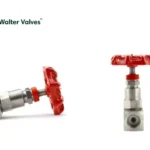
- One bleed valve (typically a needle valve)
This design:
- Enhances operational safety
- Reduces downtime for maintenance
- Provides zero leakage isolation
There are two main types:
- Single unit DBB valves: compact assemblies that combine all 3 valves into one body

- Traditional DBB configurations: two separate block valves and a bleed valve manually assembled
Why Is a Double Block and Bleed Valve Needed?
In certain systems, a single block valve might still allow leakage due to wear, seat failure, or pressure build-up. A DBB valve solves this by:
- Ensuring redundant isolation
- Allowing safe venting of trapped media
- Supporting safe maintenance or instrument calibration
- Preventing cross-contamination in multi-fluid systems
It’s a must-have in hazardous fluid systems and critical shut-off zones where failure is not an option.
Where to Use a Double Block and Bleed Valve?
Oil and Gas Pipelines
One of the most common DBB applications is in upstream, midstream, and downstream oil and gas systems, where failure could result in environmental or safety disasters.
Use cases include:
- Main pipeline isolation
- Pig launcher and receiver units
- Offshore platforms and FPSOs
- Fuel gas lines and wellheads

Chemical and Petrochemical Plants
In corrosive or reactive media systems, DBB valves are used for:
- Reactor isolation
- Transfer lines between aggressive fluids
- Tank inlet/outlet isolation
- Safe maintenance of process analyzers or instruments
The ability to vent and test for leakage is essential in these volatile environments.
Power Generation Systems
Power plants (nuclear, thermal, or gas-fired) use DBB valves for:
- High-pressure steam lines
- Boiler feedwater isolation
- Turbine lube oil systems
- Chemical dosing or sampling lines
These environments demand safe isolation for high-temperature and high-pressure systems.
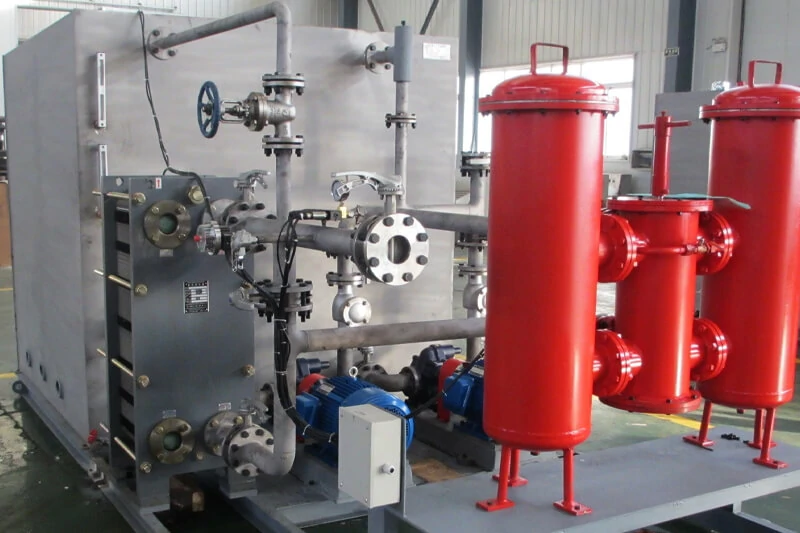
Instrumentation and Control Systems
For measurement and control accuracy, instrumentation systems use DBB valves for:
- Transmitter isolation (pressure, flow, level)
- Gauge calibration points
- Flow switch and sensor access
WalterValves’ DBB assemblies are ideal for this compact and precise use, minimizing leak points compared to traditional setups.
LNG and Cryogenic Applications
Cryogenic systems demand absolute integrity. DBB valves are used in:
- LNG storage and loading systems
- Low-temperature pipelines
- Marine LNG transfer
Leak-free performance is critical in flammable cryogenic environments.
Refinery and Downstream Processing
- In refineries, DBB valves are used for:
- Column sampling points
- Heat exchanger isolation
- Desalter systems
- Transfer manifolds
Shutdown safety and inline testing are key drivers here.
Advantages of Using a Double Block and Bleed Valve
- Positive isolation for safety-critical tasks
- Bleed port allows leak detection between seals
- Reduces space and weight vs traditional 3-valve setups
- Fewer connections = fewer leak paths
- Easy maintenance without shutting entire system
- Lower installation cost in the long run
DBB Valve Materials and Standards
At WalterValves, we manufacture DBB valves using high-grade materials for long-lasting performance:
| Component | Common Materials |
| Body | SS316, SS304, Duplex, Carbon Steel |
| Seats/Seals | PTFE, Graphite, PEEK |
| Bleed Valve | SS316 Needle Valve |
| Connections | NPT, BSP, SW, BW, Flanged |
Valves meet:
- ANSI/ASME
- API 6D / API 598
- ISO 9001 Certified Production
- Customizations available

How to Choose the Right DBB Valve?
When selecting a DBB valve for your system, consider:
Pressure & Temperature Ratings
Ensure the valve handles your system’s max pressure and thermal conditions.
Media Compatibility
Choose body and seal materials compatible with the fluid (acidic, gas, cryogenic, etc.)
End Connections
NPT or BSP for instrument lines, Flanged or BW for pipelines.
Maintenance Access
If regular calibration or draining is required, opt for an easily accessible bleed port.
Size and Weight Constraints
For offshore or compact systems, use an integrated DBB valve to reduce footprint.
If unsure, our engineers at WalterValves can help with application-specific recommendations.
Example: WalterValves DBB Valve in Action
Case Study: Instrument Calibration in Offshore Rig

A client operating an offshore platform needed compact, safe isolation for pressure transmitters. WalterValves supplied 3-valve integrated DBB units with SS316 bodies and PTFE seals.
✅ Reduced installation time by 40%
✅ No leakages recorded after 6 months
✅ Easy maintenance and venting improved safety
Contact us at info@waltervalves.com to learn how our DBB solutions can help your project.
Conclusion
Double block and bleed valves aren’t just about compliance—they’re about safety, reliability, and peace of mind in critical applications. Whether you work in oil & gas, chemicals, or instrumentation, DBB valves offer the ultimate isolation solution when failure is not an option.
Have questions about choosing the right valve for your system?
Contact WalterValves today or explore our full range of Instrumentation Valves, including Ball Valves, Needle Valves, and DBB solutions.