Check valves and relief valves are both essential components in fluid systems, but they serve fundamentally different purposes that are often confused. Understanding the difference between check valve and relief valve is crucial for proper system design and safety. While a check valve vs pressure relief valve may look similar in some cases, their operating principles and applications vary significantly.
This comprehensive guide examines their distinct functions, applications, and how to choose the right valve for your specific needs. Whether you’re designing a new system or troubleshooting existing equipment, this comparison will help you make informed decisions about valve selection and implementation.
What is the Function of a Check Valve?
Check valves, also known as non-return valves or one-way valves, serve a singular but critical purpose: they allow fluid flow in one direction while automatically preventing reverse flow when the flow stops or reverses.
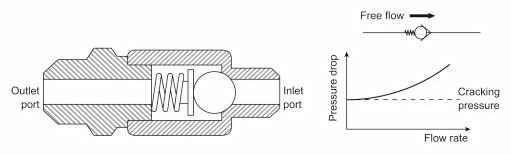
These passive devices operate entirely based on differential pressure, requiring no external control.
The mechanism involves a closing element that opens when forward pressure exceeds the cracking pressure and closes when downstream pressure exceeds upstream pressure.
This automatic operation prevents backflow that could damage equipment, contaminate media, or disrupt process efficiency.
Applications of check valves include:
Pump systems: prevent reverse flow and protect pumps/motors.
Plumbing: maintain water column integrity and prevent back-siphonage.
Compressed air systems: maintain pressure in circuit sections.
HVAC systems: prevent reverse circulation.
Petroleum pipelines: prevent product mixing and maintain flow direction.
Their simplicity, reliability, and cost-effectiveness make check valves indispensable in fluid handling systems.
What is the Function of a Relief Valve?
Pressure relief valves (PRVs) are critical safety devices that protect pressurized systems from overpressure conditions.
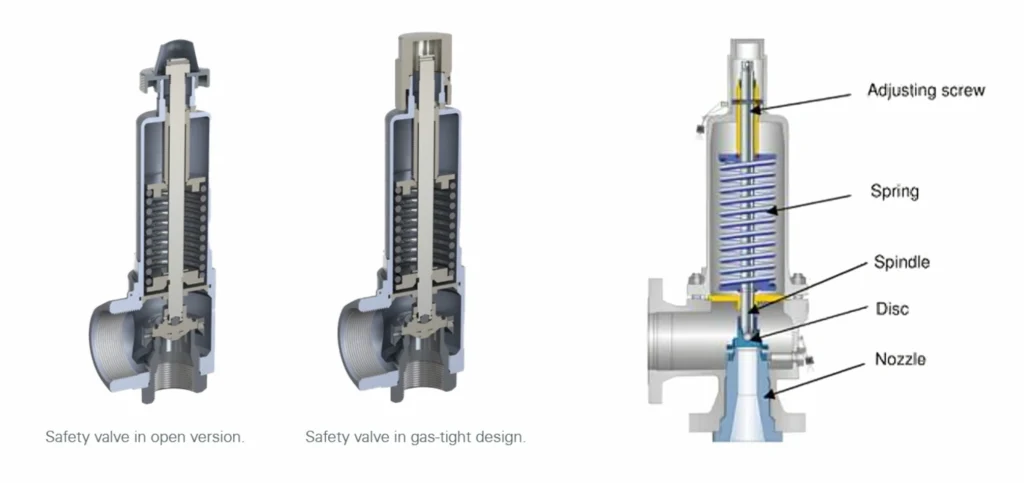
They automatically open when system pressure exceeds a set point, diverting excess fluid.
Once pressure returns to normal, the valve reseals.
Unlike check valves, relief valves are primarily safety devices rather than process control components.
Applications include:
- Boiler systems: prevent explosions from pressure buildup.
- Hydraulic systems: protect against spikes from thermal expansion or pump malfunction.
- Process industries: safeguard vessels, reactors, and tanks.
- Oil and gas: applied on pipelines, separators, and other pressure-sensitive equipment.
Regulatory standards such as the ASME Boiler and Pressure Vessel Code mandate relief valves in many pressurized applications.
What is the Difference Between Pressure Relief Valve and Check Valve?
The key differences include:
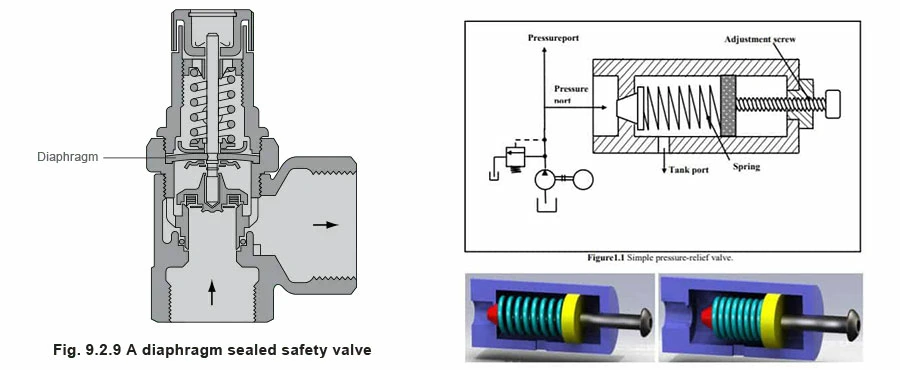
Primary function:
- Check valves: control flow direction and prevent backflow.
- Relief valves: protect against overpressure.
Operation:
- Check valves: operate continuously during normal system use.
- Relief valves: remain closed under normal conditions and open only during overpressure.
Design:
- Check valves: simple, few moving parts, minimal pressure drop.
- Relief valves: more complex, often with adjustable spring loading and blowdown adjustment.
Installation:
- Check valves: installed inline with process flow.
- Relief valves: branch off process lines, discharging to safe locations.
Performance and maintenance:
- Check valves: operate frequently, require wear inspection.
- Relief valves: activate rarely, require periodic testing to avoid sticking.
How Does a Check Valve Compare to a Safety Valve?
While both serve protective functions, they address different hazards:
- Check valves: prevent reverse flow, respond to flow direction changes.
- Safety valves: protect against overpressure, respond to pressure exceeding a set point.
Applications:
- Check valves: process valves during normal operation.
- Safety valves: emergency devices used only during abnormal conditions.
Performance expectations:
- Check valves: frequent operation with minimal pressure drop.
- Safety valves: precise opening at set pressure, high capacity, leak-tight sealing otherwise.
Industry standards:
- Check valves: governed by API 6D.
- Safety valves: governed by ASME Section VIII.
In practice, both may be used together—for example, check valves in pumps and safety valves on pressure vessels.
What Are the Types of Check Valves?
Check valves come in different designs for varied applications:
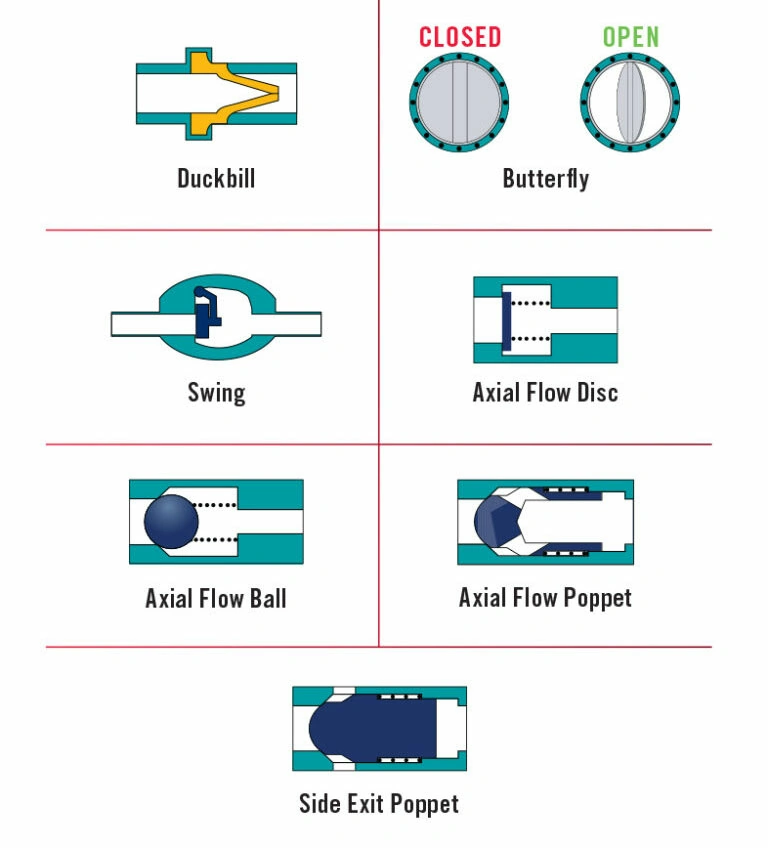
- Swing check valves: hinged disc swings open with flow, low pressure drop.
- Lift check valves: guided disc lifts vertically, better sealing but higher pressure drop.
- Ball check valves: ball element, good for viscous fluids or debris.
- Special designs: dual plate, stop check, and silent check valves.
Materials:
- Bronze, cast iron: general service.
- Stainless steel, exotic alloys: corrosive or high-temperature applications.
- Each type balances cost, sealing, orientation requirements, and pressure drop.
What Are the Types of Relief Valves?
Relief valves are available in specialized designs:
- Conventional spring-loaded: economical, simple spring mechanism.
- Pilot-operated: use system pressure for tight sealing and high capacity.
- Balanced bellows: isolate spring, reducing backpressure effects.
Application-specific designs include:
Thermal relief valves: protect against liquid thermal expansion.
Vacuum relief valves: protect storage tanks.
Safety relief valves: handle both liquid and gas.
Industry variants:
API-certified refinery valves.
Cryogenic valves for low-temperature service.
Sanitary valves for food and pharma.
Material choices:
- Carbon steel: general use.
- Stainless steel: corrosive fluids.
- Monel, Hastelloy: severe service.
Selection depends on set pressure, capacity, and fluid characteristics.
Conclusion
Check valves and relief valves are complementary, not interchangeable:
Check valves: passive devices preventing backflow during normal operation.
Relief valves: safety devices preventing dangerous overpressure.
Proper system design requires:
Understanding pressure ranges, flow conditions, and potential failure modes.
Meeting regulatory requirements (especially for relief valves).
For assistance with valve selection or to explore available models, contact our engineering team. Access our catalogs to ensure your systems operate safely and efficiently with valves that meet quality and reliability standards.